
A private car from Ho Chi Minh City to Ben Tre should start with the actual endpoint: a relative’s home, a garden stay, a work appointment or the pier for Con Phung. Access and return collection differ between them.
One day can centre on river activities; two days allow a slower garden stay. Avoid joining too many areas together and treating them as small stops around the town centre.
This guide begins in Ho Chi Minh City. Send the destination’s current location, particularly where an older address and the establishment’s name are still used together.
The route table helps you begin comparing vehicles. The approach to a house, the pier, waiting and continuing to Ba Tri or elsewhere need to appear in your actual plan.

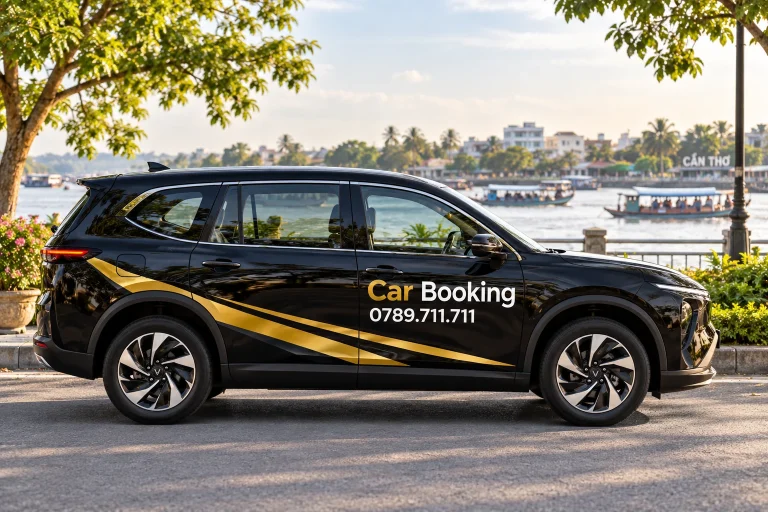
AI-generated illustration of the vehicle and trip planning.
Locate the exact place in Ben Tre
Distinguish the centre from Con Phung, a garden property or an address in Ba Tri, Mo Cay or Giong Trom. These names help orient the trip but do not replace a final location pin. Choose the essential destination before deciding whether there is room for optional visits.
Make pickups manageable
People living nearby can gather together to reduce collection stops. For older passengers or plenty of luggage, prioritise a place where the car can stop with little walking. After-work pickup also needs time to leave the building and collect bags: finishing work is not the same as everyone being seated.
Crossing the river and reaching the last road
Through the Rach Mieu bridge area, the road choice should suit the final drop-off and signs on the travel day. Do not fix a route simply from the name Ben Tre. Work backwards from a ceremony, meeting or boat departure, including time to locate the correct last gate.
A garden property may be beyond a narrow lane or small bridge. Ask the host which vehicles have reached it, whether there is turning space and which approach to take. If unloading on the main road is necessary, agree on a safe stop and who will help passengers and carry bags before travelling.
Choose around people, belongings and access
A 4-seat category is worth considering for a light-travelling small party, but count gift baskets, cases and things coming home. A small family can still need extra luggage room. Describe the largest item and number of pieces, not just passengers.
Families with children can compare 7-seat cars; larger parties should discuss group vehicles or limousines. Check the destination approach as well as seats. Boxes of gifts may make a vehicle with enough seats harder to load.
If continuing to Can Tho, list that as a separate leg and consult the Ho Chi Minh City–Can Tho route. A Ben Tre schedule does not describe the longer journey.
One way, waiting or an overnight visit?
A one-way transfer suits passengers staying with family. For a same-day return, give the gathering place and expected finish. Visits to several homes between the two transfers are additional legs: “return” does not automatically cover all local travel.
A day around Con Phung
Make Con Phung the main activity and ask the operator about embarkation and landing points, meals, boat times and booked activities. The car reaches the road meeting point; the boat and island experiences are separate services. Allow time to assemble everyone again before return collection.

AI-generated illustration of the vehicle and trip planning.
Gardens, homestays and Ba Tri
Ask accommodation about check-in, vehicle access and activities requiring advance booking. If the car only drops you off and returns the following day, know how the group will travel locally. If you need it to stay, send the proposed visits and overnight schedule together.
Ba Tri needs its own address and road leg; it is not automatically a brief stop on a transfer to central Ben Tre. Choose the cultural or historical place you want to visit and ask about group reception and parking. Older travellers may prefer fewer visits to repeatedly boarding and alighting.
Family events and work visits need different plans
For weddings, memorial gatherings or family celebrations, arrive before the ceremony so everyone can get ready and carry items inside. List passengers on each leg, homes to visit, flowers and ceremonial gifts. Ask the host where the car can stop without blocking access, and arrange someone to receive the items.
For work, send the establishment, visitor gate, host and appointment time. Warehouses, offices and survey sites may have different addresses. Leave a gap between meetings to exit parking and gather the party. Describe samples or equipment by quantity, dimensions and care requirements.
Meals, breaks and purchases to bring home
Add the address of a reserved restaurant and ask about parking. Children and older passengers should not have to rush a meal to recover a late start. Pack fruit, cakes and local purchases; mention delicate items or anything needing cooling beforehand.
Rain and a workable alternative
Near departure, ask attractions which activities are operating and about access conditions. If rain makes boarding a boat or visiting a garden inconvenient, consider dropping an activity or resting longer. Hiring a car does not guarantee every outdoor part of the day can happen.
Read the quotation against your itinerary
Compare the route fare above with the Ho Chi Minh City pickup and actual endpoint. Finishing at a hotel differs from reaching a pier, waiting for activities and driving farther into a garden area. Extra stops, waiting and an overnight requirement belong in the initial request.
Ask about tolls, parking and changes to the plan. Separate boats, meals and destination services from the car so nobody mistakes the road fare for the full cost of the day.
Send the booking details together
- Choose the main purpose and required arrival time.
- Give the Ho Chi Minh City pickup and a contact who will answer.
- Add the house gate, accommodation or pier pin.
- Count passengers and large items for both directions.
- List additional legs, waiting and the return date.
- Review the vehicle arrangement and agreed charges.
A message with a pin for each stop is clearer than “a little farther down the lane”.
Questions before a Ben Tre trip
Can a 16-seat vehicle reach the homestay?
Check the actual vehicle, address and host’s directions. If the final approach is unsuitable, agree on unloading and luggage assistance before leaving.
Does the car trip to Con Phung include the boat?
The road transfer and boat arrangements are separate. Check what the activity operator supplies; do not infer boat times or inclusions from the car schedule.
Can the car wait during a celebration or outing?
Request waiting and give the return meeting point and expected finish. For Con Phung, the boat operator’s schedule helps plan collection, but must be checked separately.
What if the address uses an older local name?
Send the current pin, establishment name, entrance and local contact. An old name can help explain the location but should not be the only direction.
Can some passengers stay while the others continue?
List each drop-off and the passengers remaining. Discuss the longer journey using its real final endpoint rather than applying one route fare to everywhere.
Arrange the journey with Car Booking
Send a booking request for Ho Chi Minh City to Ben Tre. Alongside the chosen vehicle, check where its service ends, the return leg and access to the gate you need.
Frequently Asked Questions about Private Car from Ho Chi Minh City to Ben Tre
Can a 16-seat vehicle reach the homestay in Ben Tre?
Check the actual vehicle, address and host's directions. If the final approach is unsuitable, agree on unloading and luggage assistance before leaving.
Does the car trip to Con Phung include the boat?
The road transfer and boat arrangements are separate. Check what the activity operator supplies; do not infer boat times or inclusions from the car schedule.
Can the car wait during a celebration or outing?
Request waiting and give the return meeting point and expected finish. For Con Phung, the boat operator's schedule helps plan collection, but must be checked separately.
What if the address uses an older local name?
Send the current pin, establishment name, entrance and local contact. An old name can help explain the location but should not be the only direction.
Can some passengers stay while the others continue?
List each drop-off and the passengers remaining. Discuss the longer journey using its real final endpoint rather than applying one route fare to everywhere.