
A Ho Chi Minh City to Ca Mau private car suits a family traveling together, a group with substantial belongings or a work trip to a precise address. This road journey needs time for rest; choose arrival and drop-off before working back to pickup.
A final stop in central Ca Mau differs from Dat Mui. If visiting Cape Ca Mau is the purpose, name that place directly instead of using Ca Mau as shorthand for the entire journey.
For several days away, decide whether the car only delivers you or also serves the stay. A return trip still needs its date, boarding point and passenger count for each leg.
The following helps organise travel from Ho Chi Minh City around the actual purpose, separate legs and prepare people and luggage. The top table refers only to the existing route’s drop-off, not every destination in the region.

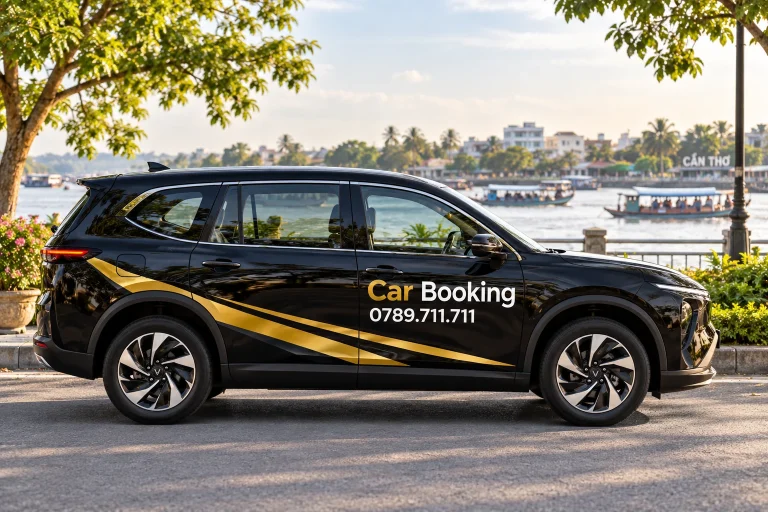
AI-generated illustration of a vehicle and trip preparation, not a record of an actual transfer.
Ho Chi Minh City to Ca Mau private car: allow a real road day
Do not book a Ca Mau appointment using driving time alone. The journey begins at a Ho Chi Minh City pickup door and may require passenger collection, breaks, meals and unloading. Leave a margin for a meeting or family celebration, especially if anyone tires easily.
The route distance helps initial planning but does not replace the actual drop-off. A home, office or hotel needs a name and entrance pin. If relatives are outside the centre, ask which approach a car can use and send it from the start, rather than treating it as an insignificant final turn.
If you intend to begin activities immediately on arrival, consider everyone after the long road journey. Checking in and resting on the first day may be more reasonable than adding many visits. For a fixed commitment, give the required arrival to discuss departure; a late start is not a reason to demand rushed driving.
Read the Ca Mau fare with its endpoint and use
The dynamic table above compares this route’s vehicle categories. To match it with your trip, know where it ends and how the car is used. One-way delivery, separate transfers several days apart and a vehicle serving several places are three different requests.
Ask which address the quote covers, whether the car waits and whether the return is confirmed. If continuing to Dat Mui or visiting somewhere else, separate that leg for discussion. A destination sharing the name Ca Mau is not automatically included in a fare to the centre.
For several days, send each night’s accommodation and expected vehicle-use periods. Lodging, meals and activities cannot be inferred from a road-route table. A short plan with enough addresses makes comparison clearer than an amount with no defined service.
Ca Mau town and Dat Mui need different trip requests
Cape Ca Mau and Mui Ca Mau National Park are associated with mangrove landscapes, not a drop-off equivalent to a town hotel. Allow dedicated time and name the receiving entrance of your chosen activity. The Ca Mau route information does not describe that full onward leg.
Before choosing the schedule, ask the provider where to arrive, whether the activity continues by another vehicle and when you return to the meeting point. A road car delivering you to an agreed gate does not include boats, tickets or a guide by implication. Put separately booked services next to one another in the plan so responsibilities are clear.
A family might arrive in Ca Mau on day one, keep day two for the main activity and then plan the return. This is a way to consider the days, not an available packaged tour. With limited time, choose between a family visit and lengthy sightseeing rather than leaving both without enough rest.
Distinguish definite destinations from places to visit only if time remains. An undecided stop should not appear as a confirmed quoted address. Establish the clear part first, then add the rest so you can see which change alters the car plan.
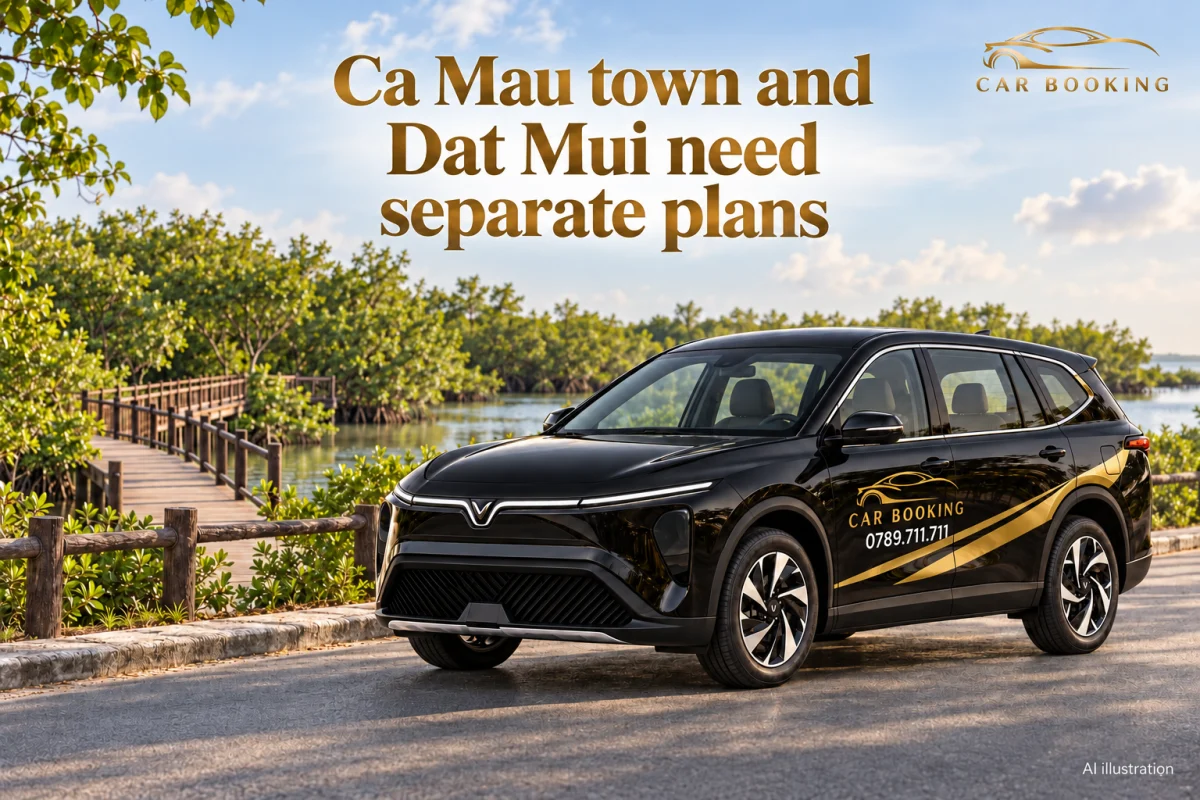
AI-generated illustration of a vehicle and trip preparation, not a record of an actual transfer.
Leave Ho Chi Minh City with one passenger and luggage list
Choose a coordinator for pickups, phone numbers and everyone’s belongings. Send multiple home addresses together to arrange their order. A shared meeting point can reduce detours, but only if everyone can reach it conveniently; limited mobility and heavy bags need individual consideration.
Apartment buildings need a lobby and vehicle entrance; alley homes need a legal gathering place. Tan Son Nhat connections should include the terminal and flight number, with baggage time allowed. Do not schedule departure from Ho Chi Minh City close to landing before the group knows when it can reach the exit.
On a longer journey, keep water, a light layer, personal items and children’s essentials in one accessible bag. Discuss more frequent breaks in advance so arrival planning reflects real needs, not just an on-screen journey duration.
Leave space for people and what comes home
Family visits often carry gifts out and relatives’ parcels back. Check both legs’ luggage, particularly food cartons, fragile items and a stroller. Ask whoever packs goods about sealing and suitable storage. Send dimensions, not only “a few boxes”.
A compact group can compare 4-seat intercity cars. Families balancing people and cases can read about 7-seat options; groups together can consult 16-seat cars and limousines. The seat count in a category does not establish that every package will fit.
Prepare a complete booking request
Start with the date, Ho Chi Minh City pickup door, Ca Mau drop-off and people. Add luggage, required arrival and definite visits. If the car is needed after arrival, list the next leg and time period instead of using “we’ll decide there” as its service scope.
For the return, check the actual boarding place. You may arrive at a hotel but leave from relatives’ home; a different address must be reported. Mark one-way-only passengers rather than arranging the car on the assumption everyone returns together.
- Choose central Ca Mau or the actual farther endpoint.
- Agree on the date, required arrival and rest needs.
- Count people and packages for each direction.
- List extra legs and overnight accommodation when applicable.
- Reread the vehicle, addresses, waiting and confirmed cost inclusions.
Send a Ho Chi Minh City to Ca Mau private car plan to begin with these details. Keep one final itinerary for everyone. Confirm major changes such as Dat Mui or the return day before departure so the plan remains manageable for the passengers.
FAQ: Ho Chi Minh City to Ca Mau Private Car
Does a standard fare to central Ca Mau automatically include travel to Dat Mui?
No, a destination sharing the name Ca Mau is not automatically included in a fare to the centre. Cape Ca Mau and Mui Ca Mau National Park need a separate trip request, as a road car delivering you to an agreed gate does not include boats, tickets or a guide by implication.
How should apartment or alley addresses in Ho Chi Minh City be provided for pickup?
Apartment buildings need a lobby and vehicle entrance, while alley homes need a legal gathering place. You can also send multiple home addresses together to arrange their order or use a shared meeting point if everyone can reach it conveniently.
What details should be included when submitting a booking request for the journey?
Start with the date, Ho Chi Minh City pickup door, Ca Mau drop-off, and number of people. Add luggage, required arrival time, definite visits, any extra legs, and overnight accommodation when applicable.
How are luggage and personal items handled for family trips with gifts or parcels?
Check both legs' luggage, particularly food cartons, fragile items, and strollers. Ask whoever packs goods about sealing and suitable storage, and send dimensions rather than just mentioning a few boxes.
What should be considered if arriving at Tan Son Nhat airport before starting the trip?
Tan Son Nhat connections should include the terminal and flight number, with baggage time allowed. Do not schedule departure close to landing before the group knows when it can reach the exit.