
Private car Ho Chi Minh City to Rach Gia transfers need a clear purpose: reaching a home or hotel, or connecting with a boat. For a sailing, the details on the ticket and the operator’s reporting deadline matter more than a general arrival time in the city.
Rach Gia and Ha Tien are different departure points for sea travel. If your ticket says Ha Tien, do not book a road journey ending in Rach Gia just because both plans lead to Phu Quoc.
This guide starts with pickup in Ho Chi Minh City. Specify an address for each direction, especially when one leg ends at a terminal and the other begins at a hotel.
The route fare table on this page concerns the road journey. Boat tickets, island activities and taking a vehicle aboard a car ferry are not automatically part of a transfer to Rach Gia.

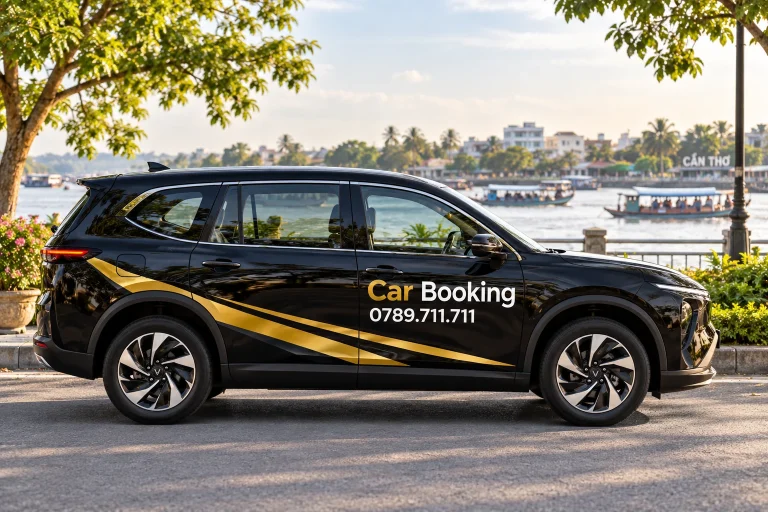
AI-generated illustration of the vehicle and trip planning.
Is Rach Gia the destination or a connection?
A family visit needs the correct house and time to unload. A business visit needs the office entrance and appointment time. An island connection needs the right terminal, sailing and time to carry luggage from the car to the boat. Those three requests should not share one generic drop-off schedule.
Operators have journeys leaving Rach Gia and Ha Tien. Read the departure point on the ticket you have selected; the island’s name alone does not identify where the car should take you. If you have not bought the ticket, settle the sea leg before making the road timing too rigid.
Confirm a workable pickup in Ho Chi Minh City
Send the street address, building entrance, working contact number and luggage count. For an early start, prepare the bags the night before. The appointment with the car should not be the moment everyone starts looking for documents or waking the rest of the party.
Several household pickups lengthen collection. Use a common point for people who can reach it easily, while considering doorstep pickup for heavy bags or mobility needs. For Tan Son Nhat, add the terminal and flight so collection can be discussed around the time after baggage retrieval.
Reach the right address and unloading point
For a boat terminal, send the ticket or booking details, operator, terminal address and reporting instructions. Do not ask the driver to choose a pier from the city’s name. If the car must unload outside the check-in area, you still need time to carry cases and find the correct desk.
A high-speed passenger boat and a car ferry are different services. Anyone planning to take a vehicle across the sea must check the departure port and vehicle acceptance with the ferry operator separately. The road car booking described here does not automatically include that arrangement.

AI-generated illustration of the vehicle and trip planning.
Decide which car services you need
One-way travel suits passengers staying in Rach Gia or sailing onwards. A return journey needs its own date, time and pickup. If you want to leave bags at a hotel before going to the terminal, list two stops rather than treating the hotel visit as a small detail the driver will arrange.
For several days on an island, ask about two separate road transfers instead of keeping a vehicle waiting. Passenger and luggage counts may differ between directions. Someone staying with relatives should be separated from the pier party or the group returning to Ho Chi Minh City.
Work backwards from the reporting deadline
Start with the boat operator’s check-in deadline, not simply departure time. Allow for leaving Ho Chi Minh City, rest breaks, reaching the terminal area and moving luggage. A calculation containing only driving time omits the tasks that can make a group late.
For an early sailing, consider travelling to Rach Gia and sleeping there the previous day. One night’s stay may make the connection easier, especially with children. If you choose an overnight drive, discuss necessary breaks and never expect faster driving to recover lost time.
The operator may alter its sea schedule. Check notices before entering the car. A different sailing time or terminal means contacting the road provider too, not assuming both arrangements automatically update together.
Prepare for both the car and boat
Keep identity documents, tickets, medication and day-use items in a small accessible bag. A large case may be deep in the car’s luggage space; opening every case at the terminal to find papers slows everyone down. Check the boat’s baggage rules, particularly for large or fragile belongings.
Choose one person to hold ticket information and another to count cases when unloading. A family should have someone stay with children while others move bags. These are preparations for your party, not a promise of luggage staff at every drop-off.
Fit the vehicle to people and actual bags
Light travellers can assess 4-seat car hire. Families with large cases, a pushchair or holiday equipment can compare 7-seat vehicles. Ask about the allocated car; an illustration does not establish luggage capacity.
A larger party should supply a passenger list and large-bag count, not just a headcount. For group transport or a limousine, discuss luggage placement and boarding access. Describe any mobility assistance at the enquiry stage.
Read the fare against the road itinerary
A Ho Chi Minh City–Rach Gia fare does not cover every address commonly described as Kien Giang. Ha Tien, several family drop-offs followed by a pier, or waiting until the next day needs its own plan. Compare quotes using the same actual endpoint.
Ask about tolls, parking, waiting and additional stops. Boat tickets and accommodation are separate expenses. If the desired vehicle or itinerary has no fare, enquire rather than borrowing another category’s amount or multiplying a one-way figure into every kind of return journey.
Two journeys that need different requests
Straight from Ho Chi Minh City to the terminal
Lead with the ticket details: terminal, sailing date and time, reporting deadline. Add the Ho Chi Minh City pickup, passengers, luggage and essential breaks. Non-essential stops should remain flexible when the connection margin is small.
Stay or work in Rach Gia before travelling on
The hotel or office is the endpoint of the first road leg. A car to the terminal the following day is another leg with its own time. When combining work and island travel, make clear which appointments belong to the car and which to the boat.
Keep tasks in Rach Gia realistic
You may need a meal, to collect something from relatives or to leave bags at your accommodation before sailing. Choose the necessary task and its address. An unplanned shopping detour far from the terminal can consume the margin reserved for check-in.
On the way back, arrange collection with time to leave the vessel and retrieve belongings. The car provider needs the arrival port, not just the island you left. If the party splits in Rach Gia, one coordinator should confirm the final passenger list for Ho Chi Minh City.
Send one complete plan before departure
Use the booking request form with your Ho Chi Minh City address, Rach Gia drop-off, boat connection if relevant, passengers, bags and return plan. Read the proposed vehicle and service scope before confirming.
Questions before booking
Can the car take us directly to the terminal?
Send its exact address and ask where road vehicles may unload. The agreed drop-off and any walk to check-in depend on the terminal’s arrangements.
Will the car take us onto the ferry?
This booking concerns road transport to the agreed point. Vehicle carriage aboard a ferry is a separate arrangement to check with the sea operator.
What if the boat’s time changes?
Report the change promptly so pickup, waiting and vehicle arrangements can be reviewed. The sea and road legs are organised separately.
Should we drive overnight for an early boat?
Consider the group’s health and need for rest. Arriving the day before is worth comparing when making the sailing matters more than avoiding one night’s accommodation.
Can we go to a hotel and then the pier tomorrow?
Request both legs explicitly. The first may finish at the hotel; the next day’s terminal trip needs its own confirmed car plan.
Frequently Asked Questions About Private Car Transfers from Ho Chi Minh City to Rach Gia
Can the car take us directly to the terminal?
Send its exact address and ask where road vehicles may unload. The agreed drop-off and any walk to check-in depend on the terminal's arrangements.
Will the car take us onto the ferry?
This booking concerns road transport to the agreed point. Vehicle carriage aboard a ferry is a separate arrangement to check with the sea operator.
What if the boat's time changes?
Report the change promptly so pickup, waiting and vehicle arrangements can be reviewed. The sea and road legs are organised separately.
Should we drive overnight for an early boat?
Consider the group's health and need for rest. Arriving the day before is worth comparing when making the sailing matters more than avoiding one night's accommodation.
Can we go to a hotel and then the pier tomorrow?
Request both legs explicitly. The first may finish at the hotel; the next day's terminal trip needs its own confirmed car plan.