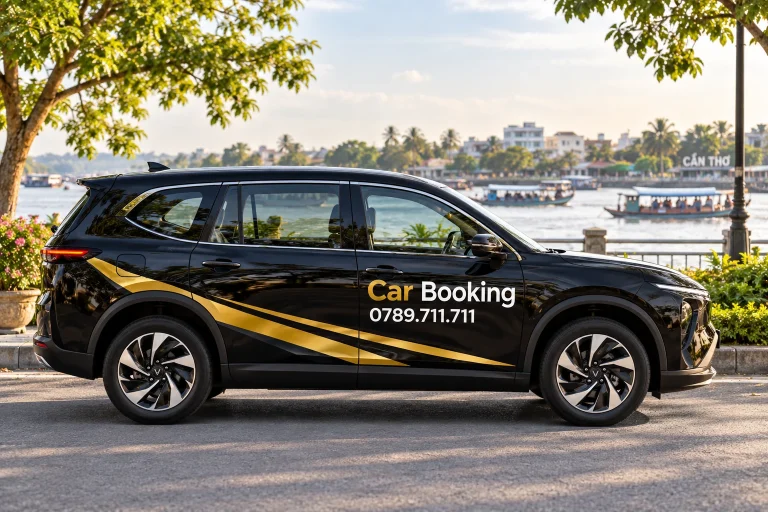

A Da Nang to Lao Bao private car on this page is a road transfer to an agreed meeting point on the Vietnamese side of the Lao Bao border area. Car Booking accepts requests for a car with a driver based on your pickup address, destination and travel date. If you want to stop in Quang Tri, include each address and the time you expect to spend there.
The header image is an AI illustration.
Specify your Lao Bao drop-off
A hotel, workplace and meeting point near the border gate are different destinations. Send a map pin with the name of your location so the stopping point and contact arrangements can be agreed.
The transfer described here ends at the confirmed Vietnam-side drop-off. Onward cross-border travel, paperwork and immigration procedures are separate from this car request.

AI-generated illustration, not a photograph of an actual trip.
Quang Tri stops need an address and a plan
Quang Tri is a broad location rather than a single stop. Describe where you want to visit, what you plan to do and how long you expect to stay. A direct transfer, a short stop and several hours of waiting involve different arrangements.
For multiple stops, send the preferred order. The car service for a personal itinerary can help you discuss waiting and additional legs.
Choose one way, waiting or a later pickup
For a one-way transfer, specify where the car service should end. For a return to Da Nang, include the proposed date, meeting point and activities between the two legs.
If your finishing time is uncertain, give a realistic time window. A displayed one-way fare does not establish the cost of waiting or a return itinerary.
Prepare your group details
Send the Da Nang pickup address, passenger count and luggage sizes. For an airport start, identify Da Nang Airport and provide your flight details and expected meeting time. Vehicle, timing and fare arrangements need confirmation before travel.
Name a clear endpoint on the Vietnam side
For Lao Bao, the area name does not say whether the car stops at accommodation, a work address or a meeting point. Use the location supplied by the person or organisation receiving you, then agree where the vehicle’s service ends. Travellers should retain that information so it is not confused with an address from another conversation.
The road service described here is discussed up to the agreed point on the Vietnam side. If you have another travel plan afterwards, check it with the responsible provider. A car request to Lao Bao should not be taken as confirmation of transport or tasks beyond that scope.
Separate essential and flexible Quang Tri visits
A family visit and a timed appointment need different planning. A stop with an appointment should be considered alongside the Lao Bao arrival deadline; a place you would like to visit if convenient should be labelled as a preference. The car contact needs the group’s priorities before reviewing several addresses.
Send the intended sequence, purpose and duration. If someone leaves the group at a stop, specify the passengers and luggage unloading there. Dropping someone off differs from a break followed by everyone continuing; specific information helps the quotation reflect the car service actually needed.
If members have not agreed the Quang Tri location, do not treat it as certain in the confirmation. Choose someone to gather the final decisions and resend one complete itinerary.
Manage the return when the finish time is uncertain
First distinguish a one-way trip, waiting within a discussed period and a separate later collection. If the final time is unknown, provide an estimated window and the person who will update it. What matters is how both sides learn of a change, rather than filling in an arbitrary time.
A later collection may be at a different place from the outward drop-off. Send the new address and contact there. Also check whether passengers or luggage change, so the return is considered as a real request rather than a single line saying back to Da Nang.
Illustrative example: a Lao Bao appointment and a family visit
Suppose a group leaves Da Nang, visits relatives in Quang Tri and then attends an appointment at a Vietnam-side Lao Bao address. The request should include the visit address, intended duration, endpoint and receiving contact. If members want to return that day but do not know when they finish, keep that wish as a separate point for discussion.
Before leaving, the representative can check that the receiving person knows the meeting location and everyone has the same plan. This example only explains organising a road leg in Vietnam; it confirms neither onward travel nor procedures or the outcome of another task.
Book the road journey separately when another party arranges your Lao Bao appointment
You may already have someone meeting you on the Vietnamese side at Lao Bao. Before requesting a car, establish where they receive you and what you have agreed with them. A local appointment and a car journey from Da Nang are separate parts with different responsible parties.
If booking for passengers, describe the travel purpose only as needed to organise the journey rather than passing on unrelated private details. Passengers still need to understand that the car serves only the confirmed Vietnam-side point and who handles information after drop-off.
This section neither advises on documents nor confirms whether cross-border business can be completed. Check those matters with the responsible party; having a car arranged does not mean the other elements are complete.
Keep provisional details clear while an appointment is unconfirmed
While a meeting date is being discussed, you can prepare road-travel options, but distinguish an enquiry from a confirmed journey. Before deciding, recheck the receiving contact and the attendance time they have agreed. A placeholder time is not an answer from the place you need to attend.
If the date changes, check whether the same Da Nang departure address still applies. Guests may be at another hotel, or only some passengers may travel on the new day. Adapting to the actual situation avoids retaining details that are no longer usable.
Once the appointment is settled, select one final version and remove alternative dates from the instructions sent to passengers. They need to know the plan to follow, not choose between possibilities discussed earlier.
Return together or let each group finish according to its own plan?
A party can travel to Lao Bao together without all returning to Da Nang. Some may stay at a Vietnam-side address, some need to return and some do not yet know when their own business finishes. Identify these groups before asking for return car arrangements.
If everyone wants to return together, agree how they will all be ready at one arranged meeting point. If a shared time is not possible, ask about separate journeys as needed, with availability and conditions requiring confirmation. One group finishing early does not automatically change another group’s plan.
For those staying, the outward journey can finish after they leave with their belongings at the agreed place. For returning passengers, check the journey and Da Nang drop-off for the return date. These distinctions help you read the quotation correctly rather than infer one price for every type of use.
Example: one party books and another receives passengers
Suppose an organiser in Da Nang books a car for a group attending a Vietnam-side appointment in Lao Bao, while the receiving contact works to a separate plan. The organiser sends passengers meeting instructions, and the car provider receives the details needed for pickup and drop-off. A programme name is not a substitute for an actual address.
If the receiving contact changes the meeting point, identify the scope affected before retaining the old arrangement. If only the contact person changes, update that person without making everyone think the route has changed too.
After drop-off, the next steps follow the passengers’ separate agreement with the relevant party. This example only clarifies roles in a car journey within Vietnam. It does not describe procedures, documents, cross-border transport or the outcome of any business.
Frequently asked questions
Does the car drop me at the border gate or in Lao Bao town?
It depends on your confirmed destination. Send a map pin to distinguish a hotel, workplace or meeting point near the gate.
Does this transfer automatically continue into Laos?
No onward border crossing should be assumed. This page describes a transfer ending at the agreed Vietnamese-side drop-off.
Does the car request include immigration paperwork?
The transport description does not promise document services or an immigration outcome. Any work beyond the car journey needs separate confirmation.
Can I stop at an address in Quang Tri first?
Send the address, purpose of the stop and expected duration. It will be considered with the overall itinerary and quote.
Can the driver wait and take me back to Da Nang?
Provide the proposed meeting point and finishing time so a waiting and return arrangement can be checked before confirmation.
What if I do not know when I will be ready to return?
Give an approximate time window and a reliable contact method. Waiting and booking a later pickup are different arrangements.
Can I start from Da Nang Airport?
Send the flight details, travel date and drop-off location. Airport meeting arrangements need to be confirmed for that pickup.
Can I bring several suitcases or work equipment?
Describe the number and size of items alongside your passenger count so a suitable vehicle can be checked.
Should I report a changed Lao Bao address?
Yes. Send the new location so the stopping point, itinerary and previously discussed quote can be reviewed.
Does submitting the form confirm my car?
It sends a request for checking. Confirm the vehicle, addresses, date, stops and fare before treating the journey as booked.