
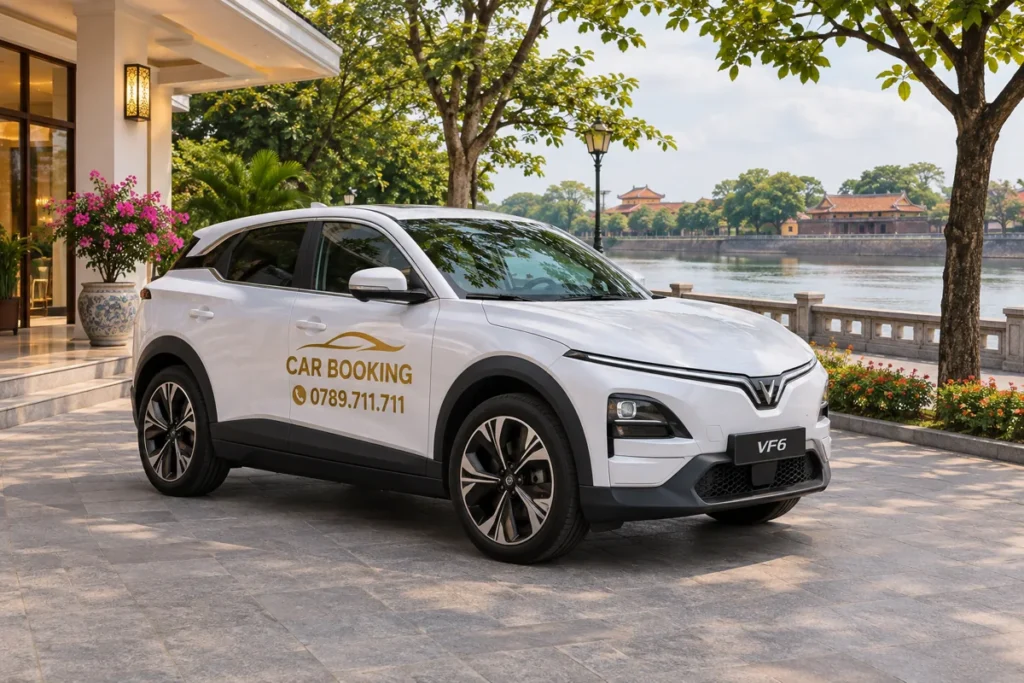
A private car from Hoi An to Hue can be a hotel transfer or a journey with agreed stops. Car Booking accepts requests for a car with a driver based on both addresses and your schedule. Decide the main purpose before adding places to visit.
The header image is an AI illustration.
Direct to Hue or time for stops?
If you are going to check in, meet family or connect with onward transport, prioritise the required arrival time and final address. For sightseeing, send the places and approximate durations so the full itinerary can be checked.
The tunnel route and a preference for Hai Van Pass should be discussed for the particular journey. Neither a single driving route nor photo stops are assumed for every Hoi An–Hue transfer.
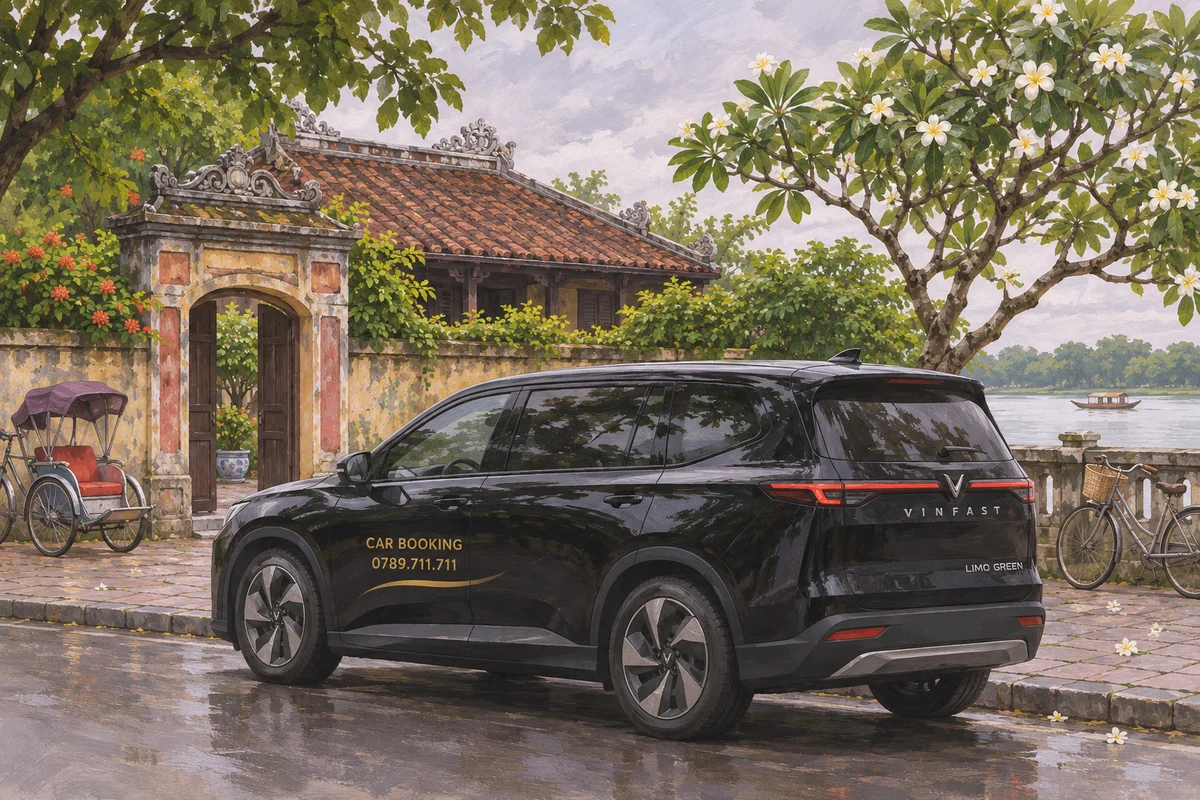
AI-generated illustration, not a photograph of an actual trip.
Choose a practical Hoi An pickup with luggage
Send the hotel name and map location. If it is in a pedestrian area or a narrow street, agree where the vehicle can stop and how to meet the driver.
For coastal accommodation, use the full property address instead of only Hoi An. Different starting points need to be checked in the quotation.
Your Hue destination and what follows
A hotel, home, railway station and Phu Bai Airport are different destinations. If connecting with a train or flight, provide its schedule so departure and contingency time can be discussed.
Visits to the Imperial City or other places before your final drop-off should be included in the request. The custom-itinerary transport guide helps clarify waiting and several stops.
Keep one itinerary and one group contact
Prepare the date, both addresses, stops, passengers and luggage. Nominate one person to agree and update the itinerary so the team is not working with different versions from different travellers.
Set the priority before discussing the tunnel or pass
For Hoi An–Hue, first explain what you need to do on arrival. If you have another transport connection or someone waiting at the final address, give that deadline priority over sightseeing preferences. If the day is intended for travel with stops, describe the places you want and discuss their order for your date.
A request for a scenic road or a quick journey is not very specific. Explain your priority and the places where you genuinely want to stop, so the trip contact understands the same need. The tunnel or Hai Van Pass option still requires agreement in the actual itinerary; the route name does not decide the experience for the group.
Leave Hoi An when everyone can reach the car
Checking out and arriving at the car with all your luggage may happen at different times. If the accommodation is in a pedestrian area or on a narrow street, agree the meeting place and who brings the group there. Families with young children or a person with limited mobility should consider the walk from the property to the stopping point too.
For two hotels or a coastal property, state how many passengers board at each address. One meeting place can simplify coordination, but familiarity alone is not a good reason to choose it if members must carry belongings farther than they can manage. The suitable plan is one the whole group understands and can follow.
Arrive in Hue for a room, work or a connection
Each purpose calls for information from a different receiving contact. A hotel needs an address and check-in arrangements; an appointment needs a meeting place and time; a train or flight needs the next leg’s details. Pass on the provider’s actual information rather than substituting Hue for a station or airport.
If you want sightseeing before reaching the accommodation, state the final point after the visits so the first stop is not mistaken for the end of service. Also clarify where luggage travels and who stays in contact if members separate. This organises the car trip; it does not replace tickets or a guide at the attraction.
Illustrative example: two uses of the same route
One group may simply want to leave Hoi An and rest at a Hue hotel; another may want a Lang Co stop before continuing. The second should specify the location and intended duration, while the first should check when it can access the room. These needs should not be merged into one description just because the route name is the same.
If your goal changes during the discussion, resend the complete revised itinerary rather than several disconnected messages. The representative can check departure, stops and final drop-off in one confirmation. It then becomes clear whether a stop is within the agreed scope or still a member’s suggestion.
Balance sightseeing preferences with the group’s comfort
When discussing the route from Hoi An to Hue, passengers may mean different things by a scenic journey. Some want to stop at a selected place; others only want to look out of the window before reaching their accommodation. Clarifying this first helps avoid choosing a plan that only some of the group really want.
If someone is uncomfortable with a particular kind of road journey or wants fewer stops, describe that personal preference in the discussion. Do not assume one route suits everyone based on pictures or promotional descriptions. Tunnel, pass and stopping choices still need to be considered within the specific itinerary.
The decision is whether to make the journey part of a sightseeing day or save your energy for Hue. Either priority can guide your request; neither means every wish is already included in a hotel transfer.
Explore Hue before or after checking in?
If you want to visit somewhere in Hue on arrival day, picture the group with its belongings after leaving Hoi An. Ending the car service at the hotel first can separate check-in from later activities, provided the accommodation confirms suitable reception arrangements. Going directly to an attraction requires you to check what happens to your belongings and how everyone meets again.
Not every place in your plan needs to be served by the same car. You can ask only for the hotel transfer and arrange sightseeing yourself after resting. If you want a continuous itinerary, submit the full car requirement for assessment while asking the activity provider separately about tickets and guides.
If the group has not chosen its visits, a flexible arrival period may be easier to manage than several unagreed deadlines. A place mentioned in conversation should not be mistaken for a booked activity or a compulsory stop.
One night in Hue and a longer stay create different connections
Guests spending only one night in Hue before continuing should consider their departure day as well. If they need to reach a station or airport the next morning, those details belong to the following day’s plan; they do not turn the Hoi An–Hue transfer into overnight car service.
During a longer stay, your sightseeing plans may evolve while the transfer from Hoi An retains its confirmed endpoint. If you later need another pickup, use current details rather than assuming all activities in Hue were covered by the first booking.
Distinguishing these stays also avoids committing to too much on arrival day. Choose what you actually want to finish before resting, then consider whether the rest needs another service or a separate day.
Example: choosing between an appointment and an extra stop
Suppose two passengers need to attend an appointment in Hue while the others want more time at a chosen stop. Before requesting the car, agree on one priority or consider separate itineraries. Those attending the appointment should not rely on a direct-transfer plan while everyone else relies on a sightseeing plan.
If you stay together and prioritise the appointment, sightseeing can be reconsidered after arrival. If you keep the stop, those with the appointment need to check the arrangement with the receiving party. The car is discussed according to the group’s final decision; it does not confirm an outside appointment.
Compare options by their endpoint and what happens after leaving the car, not only by the number of places mentioned. A shorter itinerary serving the shared purpose is easier to understand than a long list interpreted differently by each passenger.
Frequently asked questions
Does the Hoi An–Hue fare include a Hai Van stop?
The stops and route should be stated in your quotation. Request the pass or a scenic stop so the schedule can be checked beforehand.
Can I ask for the tunnel instead of the pass?
State the group's preference when requesting the car. The driving route is discussed for the date, addresses and actual conditions.
Where can we meet the car when staying in Hoi An old town?
Send the accommodation location to agree a vehicle-accessible pickup. Your hotel may help identify a convenient meeting point.
Can we request a stop in Lang Co?
Give the specific location and intended duration. The stop needs to be reviewed with the whole schedule and quotation.
Is a Phu Bai Airport drop-off the same as a Hue hotel transfer?
They are different destinations. For the airport, send the flight details and the time you need to be there.
Can we visit places in Hue before the hotel drop-off?
Send your list and approximate durations. Sightseeing, waiting and the final address should be agreed before the journey.
Can we move hotels with several suitcases?
Give the bag count and bulky-item dimensions together with passenger numbers so the vehicle space can be checked.
Does the driver also act as a sightseeing guide?
That role is not assumed in a transport request. If you need guiding, ask for its scope to be confirmed separately.
Can I request collection in Hue on another day?
Provide the return date, time and address so availability can be checked. Waiting and a later collection are different arrangements.
What should I check before departure?
Review the meeting point, date and time, luggage, stops and contact in your confirmation. Report address or schedule changes promptly.